Beyond the Screen: How Esports Is Redefining Competition and Culture
Esports has emerged as one of the most dynamic and influential forms of modern entertainment. What once began as casual competitive gaming among friends has evolved into a global industry featuring professional players, massive tournaments, passionate fanbases, and cultural impact comparable to traditional sports. Esports is no longer just about games; it is about competition, community, technology, and a new generation redefining what it means to be an athlete in the digital age.
The Origins of Esports
The roots of esports can be traced back to the early days of video gaming, when players gathered in arcades and small venues to compete for high scores and bragging rights. These early competitions were informal, but they laid the groundwork for structured competitive gaming. As home consoles and personal computers became more common, multiplayer gaming expanded, allowing players to compete beyond physical locations.
The rise of the internet played a pivotal role in esports development. Online multiplayer games enabled players from different regions to compete in real time, creating a global competitive environment. Over time, organized tournaments, rankings, and professional teams emerged, transforming competitive gaming into a legitimate sport with defined rules, formats, and audiences.
Esports as a Professional Industry
Today, esports is a full-fledged professional industry with players, coaches, analysts, managers, broadcasters, and event organizers. Professional esports athletes train rigorously, often spending hours each day refining their skills, studying strategies, and improving teamwork. Reaction time, mental endurance, communication, and strategic thinking are essential qualities that separate elite players from amateurs.
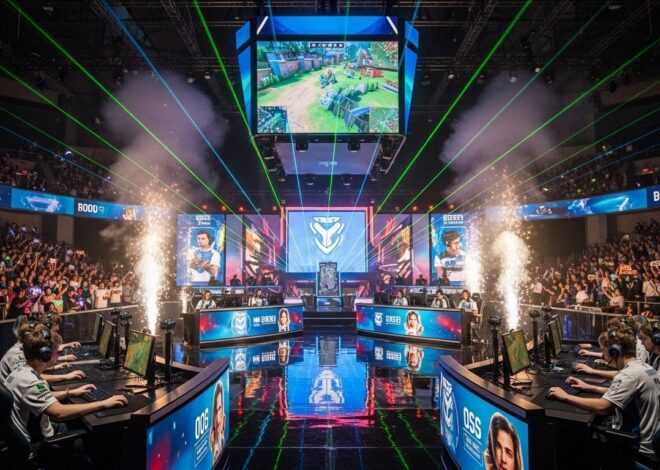
Organizations recruit players much like traditional sports teams, offering contracts, salaries, and performance incentives. Sponsorships, merchandise, ticketed events, and media rights contribute to the financial ecosystem. Esports tournaments now fill large arenas, drawing live audiences while millions more watch through digital platforms, showcasing the industry’s massive reach and influence.
Popular Esports Genres and Games
Esports encompasses a wide variety of game genres, each appealing to different audiences and skill sets. First-person shooters emphasize precision, reflexes, and teamwork, while multiplayer online battle arena games focus on strategy, coordination, and adaptability. Real-time strategy games challenge players’ decision-making and resource management, and sports simulation games bring traditional athletics into the digital realm.
This diversity allows esports to attract a broad audience, from casual fans to hardcore strategists. Each genre has its own competitive culture, heroes, rivalries, and legends, contributing to the rich tapestry of the esports world. The constant evolution of games ensures that esports remains fresh, competitive, and engaging.
The Role of Technology in Esports Growth
Technology is the backbone of esports. High-performance gaming hardware, low-latency internet connections, and advanced broadcasting tools have enabled esports to scale globally. Live streams feature professional commentary, real-time statistics, instant replays, and immersive visuals, making esports events accessible and exciting for viewers.
Advancements in data analytics allow teams to analyze gameplay in detail, identifying strengths, weaknesses, and strategic opportunities. Artificial intelligence assists in performance evaluation and training simulations, while virtual and augmented reality experiments hint at even more immersive viewing experiences in the future. Without technological innovation, esports could not have achieved its current level of sophistication and popularity.
Esports and Community Building
One of the most powerful aspects of esports is its ability to create communities. Fans connect with teams, players, and fellow enthusiasts through shared passion and loyalty. Online discussions, fan art, live chats, and community events foster a sense of belonging that transcends geographic boundaries.
Unlike traditional sports, esports communities often interact directly with players and creators. This accessibility strengthens fan engagement and builds personal connections. Players frequently stream practice sessions, discuss strategies, and share personal experiences, making esports culture more inclusive and interactive.
Esports as a Career Path
Esports has opened new career opportunities beyond playing professionally. Content creators, streamers, shoutcasters, video editors, event producers, marketers, and game developers all play vital roles in the ecosystem. Educational institutions now offer esports programs, scholarships, and degrees focused on game design, management, and production.
For many young people, esports represents a viable career path that combines passion with profession. While the journey requires dedication and resilience, it demonstrates how digital skills and creativity can translate into real-world opportunities in a rapidly evolving industry.
The Mental and Physical Demands of Esports
Despite misconceptions, esports is both mentally and physically demanding. Players must maintain peak concentration for extended periods, make split-second decisions, and manage high-pressure situations. Mental fatigue, stress, and burnout are real challenges that teams actively address through structured training, coaching, and wellness programs.
Physical health is equally important. Professional players focus on posture, hand-eye coordination, reflex training, and overall fitness to maintain performance and prevent injuries. Nutrition, sleep, and exercise are increasingly emphasized, reflecting a growing understanding that esports athletes require holistic care similar to traditional athletes.
Esports and Cultural Influence
Esports has significantly influenced modern culture, particularly among younger generations. It shapes fashion trends, music collaborations, and digital communication styles. Esports athletes have become cultural icons, inspiring fans through skill, personality, and perseverance.
Moreover, esports promotes cross-cultural interaction. International tournaments bring together players and fans from diverse backgrounds, fostering global exchange and mutual respect. This cultural connectivity highlights esports as a unifying force in an increasingly digital world.
Challenges Facing the Esports Industry
Despite its growth, esports faces several challenges. Player burnout, short career spans, and mental health concerns require ongoing attention. Competitive integrity is another concern, as issues like cheating, match-fixing, and performance-enhancing software threaten fairness.
Inclusivity also remains a challenge. While esports is accessible in theory, barriers related to harassment, representation, and opportunity persist. Addressing these issues requires collective effort from developers, organizations, and communities to create a safe, respectful, and welcoming environment for all participants.
The Role of Education and Youth Development
Esports has begun to play a role in education and youth development. Schools and universities use esports programs to teach teamwork, leadership, problem-solving, and digital literacy. Competitive gaming can engage students who may not connect with traditional sports, offering an alternative avenue for personal growth and achievement.
Structured youth leagues and amateur competitions provide pathways for talent development, ensuring that aspiring players can progress responsibly. These initiatives emphasize balance, education, and well-being alongside competitive success.
The Future of Esports
The future of esports is filled with possibility. As technology advances, esports experiences will become more immersive, interactive, and personalized. Enhanced virtual environments, improved spectator tools, and innovative tournament formats will continue to push boundaries.
Integration with mainstream media, traditional sports organizations, and global events will further legitimize esports. As audiences grow and infrastructure matures, esports is poised to become a permanent pillar of global entertainment and competition.
Conclusion: Esports as the Sport of a Digital Generation
Esports represents a new chapter in the history of competition. It blends skill, strategy, technology, and community into a form of sport uniquely suited to the digital age. Far from being a passing trend, esports reflects broader changes in how people connect, compete, and express themselves.
As esports continues to evolve, it challenges outdated definitions of athleticism and entertainment. It empowers a new generation to pursue excellence in innovative ways, proving that competition is not confined to physical arenas. Esports is more than gaming; it is a cultural movement, a professional industry, and a testament to the limitless potential of human creativity in the digital era.