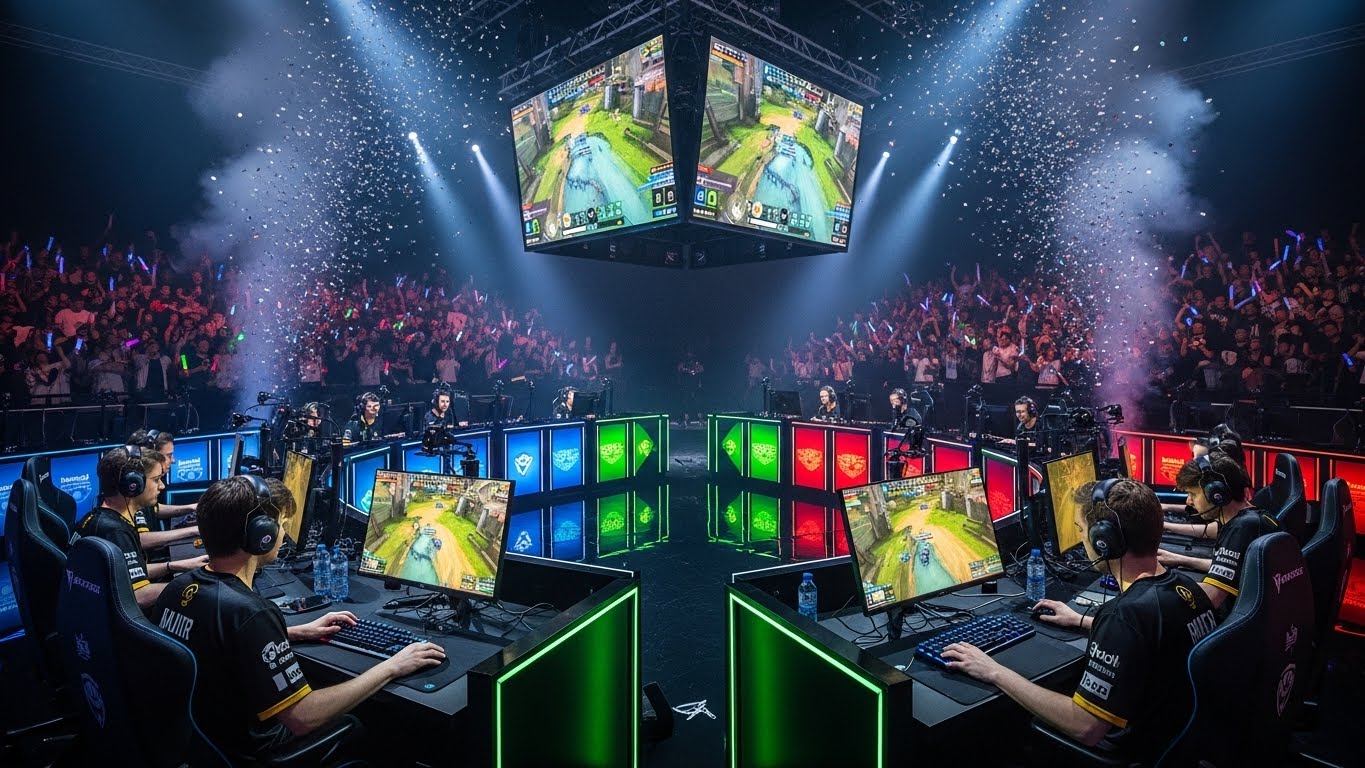
The Digital Colosseum: How Esports Became the Defining Sport of a New Generation
Introduction to the Rise of Esports
Esports has grown from a small subculture into a defining force of modern entertainment. The idea of watching skilled players compete in video games seemed unusual just a decade ago, yet today it has become a global phenomenon. Millions tune in to watch high-level matches, entire stadiums fill with cheering fans, and professional players dedicate their lives to reaching the top of their game. The rise of esports mirrors how technology reshapes society, showing that competition is no longer confined to physical arenas. Instead, the digital world now hosts its own sports, its own champions, and its own communities.
From Arcades to Arenas: The Origins of Competitive Gaming
The earliest form of esports did not involve leagues or professional players. Instead, it began with simple arcade competitions, where friends and strangers challenged each other for high scores. These early duels planted the seeds of competitive gaming long before the world realized what it could become.
In the 1990s, the rise of personal computers and multiplayer games ignited a revolution. Games such as real-time strategy titles and early shooters connected players across local networks. What started as casual gatherings evolved into organized tournaments. Players discovered that skill, strategy, and teamwork mattered just as much in virtual competitions as they did in traditional sports.
The early 2000s marked the birth of serious competitive circuits. Events attracted sponsors, prize pools grew, and the concept of a professional gamer began to take shape. This era served as the launchpad for the massive industry esports would become.
Esports Breaks into Mainstream Culture
Esports truly exploded when live streaming became popular. Suddenly, anyone could watch competitive matches from anywhere in the world. Fans could follow their favorite teams, learn strategies, and become part of a growing global community. Viewership skyrocketed because esports offered something fresh: fast-paced action, dramatic storylines, and the thrill of watching players push their abilities to the limit.
Mainstream recognition followed. Media outlets began covering tournaments, celebrities invested in teams, and traditional sports organizations took notice. Esports events now rival major sporting championships in viewership. The fact that digital competitions can attract the same attention as physical ones demonstrates the shifting priorities of a new generation of fans.
The Diverse Genre Landscape of Esports
One of the greatest strengths of esports is its variety. There is no single game that defines the industry. Instead, esports spans multiple genres, each with its own strategies and style.
Multiplayer online battle arena games emphasize teamwork, character mastery, and strategic map control. First-person shooters prioritize precision, reflexes, and tactical coordination. Fighting games rely on fast reactions, character knowledge, and mind games between opponents. Sports games simulate real-life competitions with digital precision, while battle royale titles test survival instincts and adaptability under pressure.
This diversity ensures that esports appeals to many different types of players and fans. Whether someone enjoys strategy, action, teamwork, or individual skill, there is an esports genre that speaks to their interests.
What It Takes to Become a Professional Esports Athlete
The life of a professional esports player is intense. Even though the competition takes place in a digital environment, the dedication required mirrors that of traditional athletes. Players practice for long hours daily, mastering game mechanics, studying strategies, and analyzing opponents.
Mental discipline is crucial. Pros must make rapid decisions, maintain focus under pressure, and react instantly to unpredictable situations. They often train with coaches who help refine their skills and guide strategic planning. Teams consist of analysts, managers, and support staff, all working to ensure players perform at their peak.
Physical health also matters. Extended screen time and constant hand movement can cause fatigue or injuries if not managed properly. Many pros incorporate workouts, stretches, and healthy routines to support their performance.
Becoming a professional esports athlete requires a combination of talent, dedication, and discipline. It is a demanding career path, but for those who succeed, it offers global recognition and the chance to compete among the best.
The Business Behind the Esports Boom
Esports is no longer a hobby-driven community; it is a billion-dollar industry shaped by sponsorships, advertising, merchandise, events, and team organizations. Brands see enormous value in esports because it attracts a young, engaged, tech-savvy audience. Companies from apparel to technology invest heavily in esports organizations, helping them fund training facilities, coaching staff, and global tournaments.
The career opportunities in esports extend far beyond playing professionally. Commentators, coaches, analysts, event managers, content creators, broadcast directors, and marketing specialists all help shape the esports ecosystem. The industry resembles that of traditional sports but with a digital twist that creates space for even more roles.
As esports continues to rise, its economic footprint expands, influencing entertainment, technology, and even academia.
Technology: The Backbone of Esports Innovation
Esports would not exist without the rapid advancement of technology. High-performance computers, low-latency networks, and advanced graphics have enabled competitive games to reach new levels of depth and excitement.
Broadcasting technology enhances viewer experience with instant replays, commentary overlays, and dynamic camera angles that make digital matches feel like major sporting events. Data analytics allow teams to study opponents with incredible detail, analyzing patterns and identifying weaknesses.
Emerging technologies promise even more innovation. Virtual reality could one day host immersive competitions where players compete inside fully interactive arenas. Artificial intelligence may create training tools that help players improve faster. Augmented reality could transform live esports events with interactive visuals that bring game worlds to life in physical venues.
Technology continues to push esports forward, making it more engaging, immersive, and accessible.
The Strategy and Skill That Define Esports Excellence
While casual viewers may see esports as fast clicking and quick reactions, competitive play is far deeper. Every esports title demands its own type of strategy. Teams must plan every movement, coordinate every action, and anticipate their opponents’ decisions.
Some games require map control, resource management, and long-term planning. Others reward instant decision-making, adaptability, and precise timing. Communication is vital, especially in team-based games where a single misstep can change the outcome of a match.
This combination of mental agility, teamwork, preparation, and execution demonstrates that esports is far more than entertainment. It is a form of intellectual and strategic competition comparable to chess, while also demanding quick reflexes similar to traditional sports.
The Mental and Physical Challenges Faced by Players
Esports athletes deal with challenges that are often overlooked by outsiders. Mental fatigue can be intense, especially during long tournaments or when performing under pressure. Maintaining concentration through multiple high-stakes matches requires resilience and discipline.
Physical strain is also real. Repeated movement can lead to hand and wrist issues, and sitting for long hours affects posture and energy levels. Professional teams now include physical therapists, nutritionists, and fitness trainers to ensure players stay healthy and perform at their best.
Balancing personal life, public expectations, and competitive schedules can be difficult. Yet top players continue to push themselves, proving that esports requires strength of mind and body.
Diversity and the Growing Role of Women in Esports
Women play an increasingly important role in esports as competitors, hosts, analysts, and leaders within the industry. Female players have built dedicated communities and shown that high-level competition is not limited by gender. Women bring unique perspectives to gaming culture and help broaden the appeal of esports worldwide.
Representation continues to grow, and the industry is slowly becoming more inclusive. As more women participate and succeed, esports becomes more welcoming for future generations of players and fans.
The Educational Influence of Esports
Esports has entered educational institutions in remarkable ways. Schools and universities now offer esports programs that teach teamwork, communication, critical thinking, and digital literacy. Scholarships support talented players, while academic programs explore game design, marketing, and broadcasting.
Esports motivates students to engage socially and academically. Many find passion, purpose, and direction through competitive gaming. It also prepares them for careers in technology and media, fields that dominate the modern economy.
Schools recognize that esports is more than entertainment; it is a platform for growth.
The Cultural Impact of Esports Communities
Esports communities are vibrant, creative, and diverse. Fans gather both online and offline to support teams, discuss match strategies, and share content. Artwork, stories, memes, and analysis produced by fans enrich gaming culture and foster connection.
Live events bring people together physically, creating electric atmospheres filled with excitement and unity. Team jerseys, themed merchandise, and esports-inspired fashion show how deeply gaming influences modern culture. Music, animation, and storytelling tied to esports also shape entertainment trends in unique ways.
Esports is not only a competition; it is a cultural movement powered by passionate communities.
Challenges and Issues Within the Esports Industry
Despite its success, esports faces challenges. Player burnout, demanding schedules, and performance pressure require better support systems. Some regions struggle with limited access to quality internet or hardware, which affects competitive fairness.
Toxic behavior within gaming communities remains a concern. Building a welcoming and respectful environment requires ongoing effort from developers, players, and fans.
Regulation is another challenge. Contracts, tournament rules, and player rights vary across organizations, creating inconsistencies. As esports grows, establishing stronger standards will be essential for long-term stability.
The Future of Esports
The future of esports is filled with promise. As global interest rises, new tournaments, leagues, and game genres will emerge. The integration of virtual reality, artificial intelligence, and interactive broadcast technology will reshape how fans experience matches.
Esports may one day become part of international sporting events, reflecting its global influence. Educational programs, youth leagues, and community initiatives will continue to expand, shaping the next generation of competitors.
What began as a small hobby has evolved into a global industry, and the future suggests even greater heights ahead.
Conclusion: The New Age of Competitive Greatness
Esports has transformed entertainment, competition, and culture. It blends strategy, skill, technology, and teamwork into a form of competition that resonates with millions. The digital arena has become a modern colosseum where players demonstrate mastery, fans unite, and innovation thrives.
As esports continues to grow, it inspires new dreams, creates new careers, and redefines what it means to compete. It is more than a trend; it is a revolution in how the world experiences sport.


