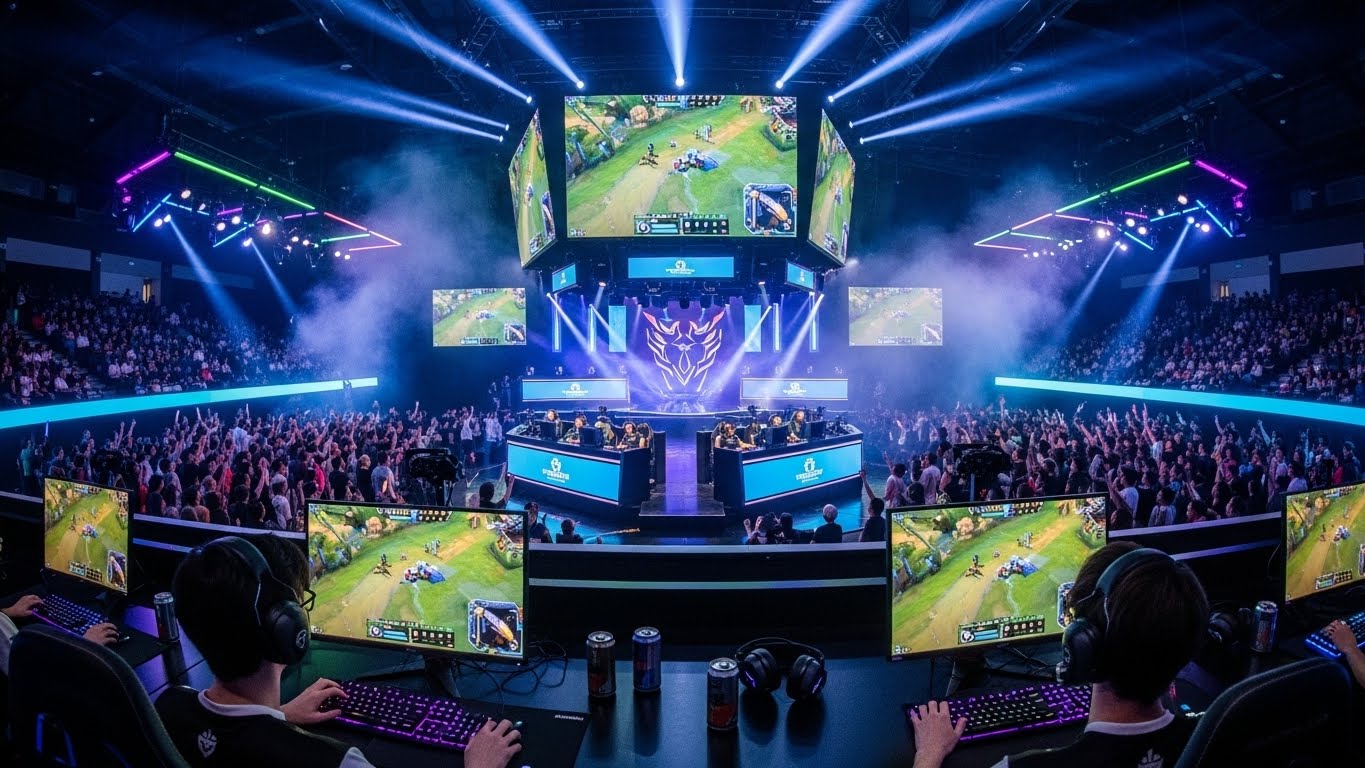
Inside the Esports Arena: Where Strategy, Skill, and Digital Glory Collide
Introduction
Esports has rapidly reshaped the meaning of competition in the modern world. What was once viewed as casual entertainment has transformed into a global industry that rivals traditional sports in popularity and influence. Competitive gaming now fills arenas, attracts massive audiences, and offers professional careers to skilled players. Esports is more than playing video games; it is a complex ecosystem built on strategy, teamwork, technology, and mental endurance. As digital culture continues to evolve, esports stands as a defining symbol of how competition adapts to the modern age.
The Origins of Competitive Gaming
The foundation of esports was laid decades ago when video games first allowed players to compete against one another. Early competitions were informal, often held in arcades or small gatherings where players tested their skills for recognition rather than reward. As home computers and consoles became more advanced, competitive gaming expanded into organized events. The introduction of online multiplayer gaming revolutionized the scene, enabling global competition. These early milestones shaped the competitive structure that esports relies on today, turning friendly rivalry into professional sport.
The Structure of the Esports Industry
Esports operates within a well-organized industry framework. Professional players form teams that compete in leagues, tournaments, and seasonal championships. These teams are supported by coaches, analysts, managers, and health professionals who ensure peak performance. Tournament organizers manage events, enforce rules, and create competitive formats. Publishers play a critical role by maintaining games and supporting competitive scenes. Fans complete the ecosystem by watching events, supporting teams, and engaging in digital communities. This structure allows esports to function as a stable and scalable global industry.
Games That Define Esports
Esports includes a wide range of game genres, each requiring different skill sets. Strategy games emphasize planning, foresight, and resource management. First-person shooters demand precision, reflexes, and spatial awareness. Multiplayer online battle games focus on teamwork, map control, and tactical decision-making. Sports simulations recreate real-world athletics in digital form. This diversity allows esports to appeal to various personalities and talents, making it inclusive and dynamic. Each genre contributes to the richness and longevity of competitive gaming.
The Skillset of Professional Esports Players
Becoming a professional esports player requires exceptional dedication. Mechanical skill, such as accuracy and reaction time, forms the foundation of success. However, mental abilities like strategic thinking, adaptability, and emotional control are equally important. Players must process information quickly, anticipate opponents’ moves, and coordinate with teammates in real time. Communication skills are vital in team-based games, where clear and efficient dialogue can determine victory or defeat. This combination of physical precision and mental agility defines the esports athlete.
Training and Discipline in Esports
Professional esports training is structured and demanding. Players often practice for several hours daily, focusing on individual mechanics, team coordination, and strategic analysis. Reviewing past performances helps identify mistakes and refine tactics. Physical fitness is increasingly emphasized, as posture, endurance, and overall health impact performance. Mental conditioning is also essential, helping players manage stress and maintain focus during intense competition. This disciplined approach demonstrates that esports success is earned through hard work, not chance.
Esports as a Global Spectacle
Esports has become a powerful form of global entertainment. Major tournaments draw millions of viewers from different countries, uniting fans across cultures. Live events feature professional production, expert commentary, and dramatic moments that rival traditional sports broadcasts. Fans follow teams and players passionately, celebrating victories and analyzing defeats. The accessibility of esports allows anyone with a screen to participate as a viewer, making it one of the most inclusive spectator sports in the world.
Community and Social Connection
Esports thrives on community interaction. Online platforms enable fans to discuss matches, share strategies, and create content inspired by their favorite games. Players often interact directly with fans, strengthening personal connections. Local tournaments and events bring people together physically, fostering friendships and collaboration. These communities provide a sense of belonging, especially for individuals who may feel disconnected elsewhere. Esports demonstrates how digital spaces can create meaningful social bonds.
Economic Impact of Esports
The financial growth of esports has been remarkable. Revenue streams include sponsorships, merchandise, advertising, media rights, and ticket sales. Professional players earn income through salaries, prize winnings, and personal branding. The industry has also created jobs in event production, broadcasting, marketing, and technology. Cities hosting major tournaments benefit from tourism and infrastructure development. Esports has proven that digital competition can be a powerful economic engine with long-term potential.
Education and Career Opportunities
Esports has opened new educational and career pathways. Schools and universities now offer esports programs that combine academics with competitive gaming. These programs teach teamwork, leadership, and technical skills while supporting students’ educational goals. Beyond playing professionally, careers exist in coaching, game design, content creation, analytics, and event management. Esports encourages innovation and entrepreneurship, providing opportunities for individuals with diverse talents and interests.
Challenges Facing the Esports World
Despite its success, esports faces several challenges. Player burnout is a growing concern due to long training hours and intense competition. Mental health pressures, online harassment, and performance anxiety can affect well-being. Fair play issues, such as cheating and match integrity, require constant vigilance. Additionally, unequal access to technology and resources limits participation for some communities. Addressing these challenges is essential for maintaining the credibility and sustainability of esports.
Diversity and Inclusion in Esports
Diversity remains an important topic within esports. Efforts are being made to encourage participation from women and underrepresented groups. Inclusive tournaments, mentorship programs, and supportive communities help create equal opportunities. Representation matters, as diverse perspectives enrich competition and culture. A more inclusive esports environment promotes respect, creativity, and global unity, reflecting the true diversity of the gaming world.
Esports and Cultural Influence
Esports has become a significant cultural force. It influences fashion, music, language, and digital trends. Gaming personalities are recognized as celebrities, shaping youth culture and online discourse. Esports also bridges generational gaps, as parents and children increasingly share interest in competitive gaming. This cultural impact highlights how esports extends beyond competition to shape modern identity and expression.
Technology as the Backbone of Esports
Technology drives every aspect of esports. High-performance hardware ensures precise gameplay, while advanced software supports matchmaking, broadcasting, and analytics. Data-driven insights help teams improve performance and strategies. Innovations such as virtual environments and enhanced viewing experiences continue to evolve the industry. As technology advances, esports will adapt, offering new possibilities for competition and engagement.
The Future of Competitive Gaming
The future of esports is filled with opportunity. Expanding global audiences, technological innovation, and institutional support will continue to shape its growth. Esports is likely to become more integrated into education, mainstream media, and global sporting culture. New games, formats, and technologies will redefine competition, ensuring that esports remains dynamic and relevant. The digital arena will continue to inspire players and fans alike.
Conclusion
Esports represents a powerful evolution of competition in the digital age. It combines skill, strategy, discipline, and technology to create an experience that resonates worldwide. Beyond entertainment, esports fosters community, economic growth, and personal development. As it continues to mature, esports proves that competition is not confined to physical spaces but thrives wherever passion, talent, and innovation intersect. The esports arena stands as a testament to human creativity and the limitless potential of digital competition.


