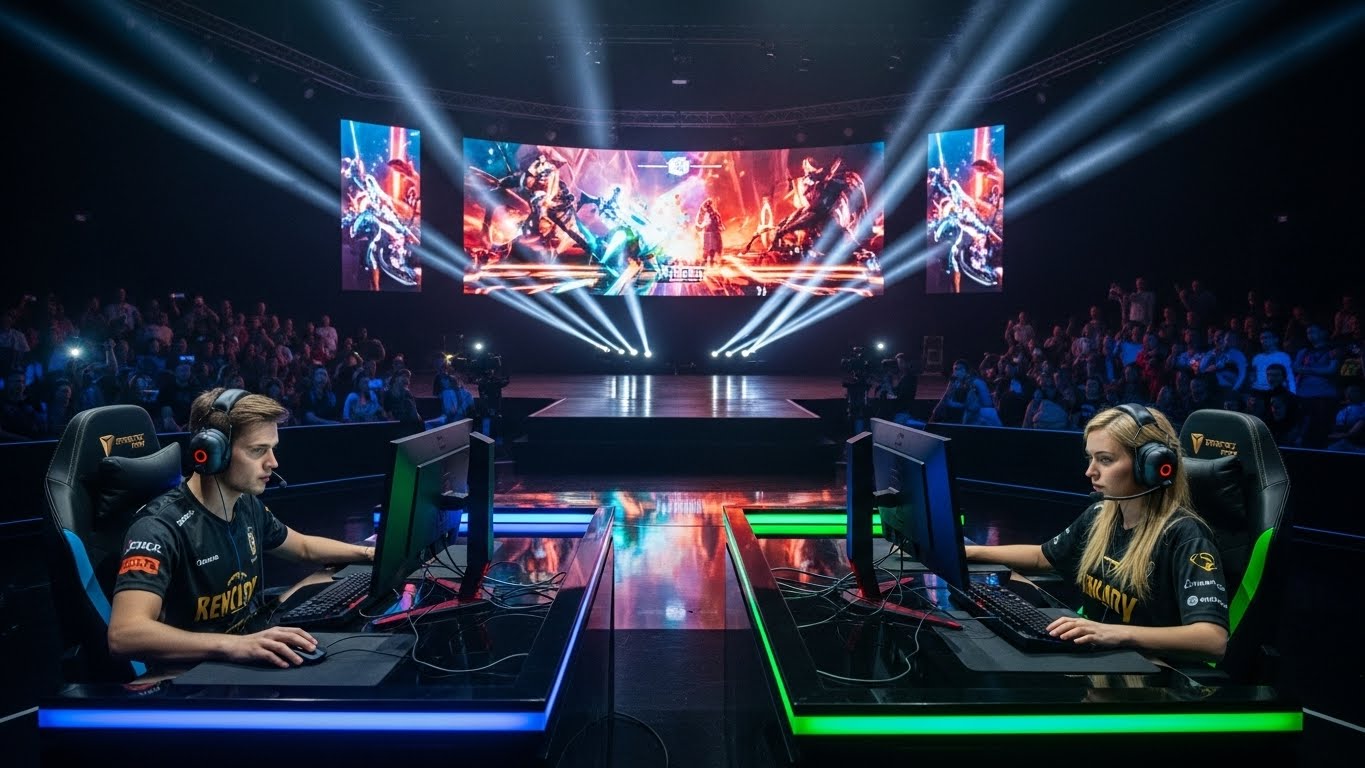
The Rise of Esports: A New Era in Competitive Gaming and Digital Entertainment
In the past decade, esports has transformed from a niche hobby into a global phenomenon. What was once a fringe activity, enjoyed by a small group of passionate gamers, has now evolved into a multi-billion-dollar industry with millions of fans, dedicated players, and massive tournaments. Esports has become a legitimate form of entertainment, attracting sponsorships from global brands, media coverage, and even universities offering scholarships to talented players. But what exactly is esports, and how did it become one of the most exciting sectors in the world of digital entertainment?
In this blog post, we will dive deep into the world of esports, exploring its history, the mechanics of competitive gaming, the major games that define the industry, the rise of esports organizations, and the future of this fast-paced and ever-evolving scene.
What is Esports?
Esports, short for electronic sports, refers to organized, multiplayer video game competitions, particularly between professional players, individually or as teams. Esports can take many forms, ranging from fighting games like Street Fighter to team-based strategy games like League of Legends, to first-person shooters like Counter-Strike and Overwatch. These competitions are often live-streamed and broadcast on platforms like Twitch, YouTube Gaming, and Facebook Gaming, allowing millions of viewers to watch their favorite teams and players compete for glory.
At its core, esports is about competition. Just like traditional sports, esports involves intense training, teamwork, strategy, and execution. While the games themselves are digital, the dedication and skill required to succeed in esports are very real. Players train for hours a day, honing their reflexes, improving their strategic thinking, and learning to work together as a team to outsmart and outplay their opponents.
The History of Esports: From Arcade to Arena
Esports has its roots in the early days of competitive gaming, long before it became the mainstream juggernaut it is today. The concept of competitive gaming dates back to the 1970s and 1980s, when games like Space Invaders and Pong were popular in arcades. The first major gaming tournament, the Space Invaders Championship, was held in 1980, drawing 10,000 players across the United States. Although this was a modest beginning, it planted the seeds for the future of competitive gaming.
The real growth of esports began in the 1990s, during the rise of personal computers and the internet. Games like Warcraft, StarCraft, and Quake became popular, and organized tournaments started to emerge. In the late ’90s and early 2000s, South Korea became a hotbed for esports. With the rise of broadband internet and the widespread popularity of StarCraft, professional leagues were formed, and gaming became a spectator sport in the country.
As broadband internet spread across the globe, esports began to take shape in other regions. The first major international esports tournament, the World Cyber Games (WCG), was held in 2000, featuring players from around the world competing in games like StarCraft and Warcraft III. This tournament, along with others like the Electronic Sports World Cup (ESWC), helped establish esports as a serious form of competition, laying the foundation for the professional leagues and massive tournaments we see today.
Esports Today: The Industry Explodes
The esports industry has experienced rapid growth in recent years. According to Newzoo’s Global Esports Market Report, the global esports market was valued at over $1.5 billion in 2023 and is expected to grow year over year. The industry’s rapid growth is driven by several factors, including the increasing popularity of online streaming platforms, the rise of mobile gaming, and the increasing interest from both traditional sports organizations and mainstream media outlets.
The development of professional esports leagues has also contributed to the rise of the industry. Games like League of Legends, Dota 2, Counter-Strike: Global Offensive, Fortnite, and Call of Duty now have professional leagues, tournaments, and seasons that span the entire calendar year. Players and teams can compete for multi-million dollar prize pools, sponsorship deals, and a chance to represent their organizations on the world stage.
The Major Games Defining Esports
While esports encompasses a wide variety of genres, certain games have emerged as the flagship titles in the competitive gaming scene. These games are the backbone of the esports industry, drawing in players, fans, and sponsorships alike.
1. League of Legends
League of Legends (LoL), developed by Riot Games, is perhaps the most prominent game in the esports world. Launched in 2009, the game quickly became a staple in the competitive gaming scene. With its accessible gameplay and strategic depth, LoL has attracted millions of players worldwide and boasts one of the largest esports ecosystems. The League of Legends World Championship is one of the most-watched esports events in the world, drawing millions of viewers every year.
The game features two teams of five players each, who compete to destroy the enemy’s Nexus, the core building located in their base. What sets League of Legends apart is its emphasis on teamwork, strategy, and coordination. Players must work together, communicate effectively, and plan their strategies in real-time to outmaneuver their opponents.
2. Dota 2
Dota 2, developed by Valve Corporation, is another flagship title in the esports world. Like LoL, Dota 2 is a Multiplayer Online Battle Arena (MOBA) game where two teams of five players battle to destroy the enemy’s ancient structure. Dota 2 is known for its high skill ceiling, intricate mechanics, and massive prize pools, particularly for its annual tournament, The International.
The International is one of the largest and most prestigious tournaments in the world, with prize pools regularly exceeding $30 million. The tournament attracts top players from around the globe and has become a major spectacle in the esports world.
3. Counter-Strike: Global Offensive
Counter-Strike: Global Offensive (CS:GO), developed by Valve and Hidden Path Entertainment, is a tactical first-person shooter that has been a staple of competitive gaming for over a decade. The game is known for its fast-paced gameplay, skill-based shooting mechanics, and strategic team play. In CS:GO, two teams—Terrorists and Counter-Terrorists—compete to complete objectives such as planting or defusing bombs or rescuing hostages.
CS:GO is a game that requires precision, reflexes, and excellent teamwork. It has a dedicated esports scene with tournaments held year-round, including prestigious events like ESL Pro League and CS:GO Major Championships.
4. Fortnite
Epic Games’ Fortnite revolutionized the battle royale genre and quickly became one of the most popular games in the world. Launched in 2017, Fortnite features a 100-player free-for-all battle where players must scavenge for resources, build structures, and eliminate opponents until only one player (or team) remains. Its accessible gameplay, cartoonish graphics, and frequent updates have made it a favorite among both casual and competitive gamers.
The Fortnite World Cup is one of the largest esports tournaments for the game, with millions of dollars in prize money up for grabs. The game’s appeal lies in its combination of action, strategy, and building mechanics, as well as its constant evolution through in-game events and updates.
5. Overwatch
Overwatch, developed by Blizzard Entertainment, is a team-based first-person shooter that has quickly established itself as a major esports title. The game features a diverse cast of heroes, each with unique abilities, and players must work together to complete objectives, such as capturing points or escorting payloads.
The Overwatch League (OWL) is a professional esports league for Overwatch, featuring teams from cities across the globe. The league has attracted major sponsorships and is one of the most popular esports leagues in North America, offering players a steady stream of income and exposure to global audiences.
The Role of Esports Organizations
Esports organizations play a pivotal role in the development and growth of the industry. These organizations are similar to traditional sports teams but are centered around digital gaming. Teams sign professional players, provide coaching and support staff, and compete in leagues and tournaments.
Many esports organizations, such as Cloud9, Team Liquid, Fnatic, and G2 Esports, have become household names within the esports community. These organizations not only support their teams with the necessary resources but also manage brand partnerships, sponsorships, and merchandise sales. With millions of fans and global reach, esports organizations have become powerful entities in their own right.
The Impact of Streaming Platforms
The rise of streaming platforms like Twitch, YouTube Gaming, and Facebook Gaming has been a game-changer for the esports industry. These platforms allow players, teams, and tournaments to broadcast live to millions of viewers across the globe. Streaming has not only made esports more accessible to fans but has also created opportunities for content creators to monetize their streams through donations, subscriptions, and sponsorships.
Twitch, in particular, has become synonymous with esports streaming, hosting everything from casual gameplay to major tournaments. The platform has attracted a massive audience of viewers who tune in to watch their favorite players and teams compete in real time. It has also become a hub for esports-related content, including analysis, commentary, and fan interaction.
The Future of Esports
The future of esports looks incredibly bright. With the continued rise of mobile gaming, esports will likely expand into even more regions and demographics. Mobile games like PUBG Mobile and Clash Royale are already seeing competitive tournaments and attracting large audiences. As mobile devices become more powerful,


