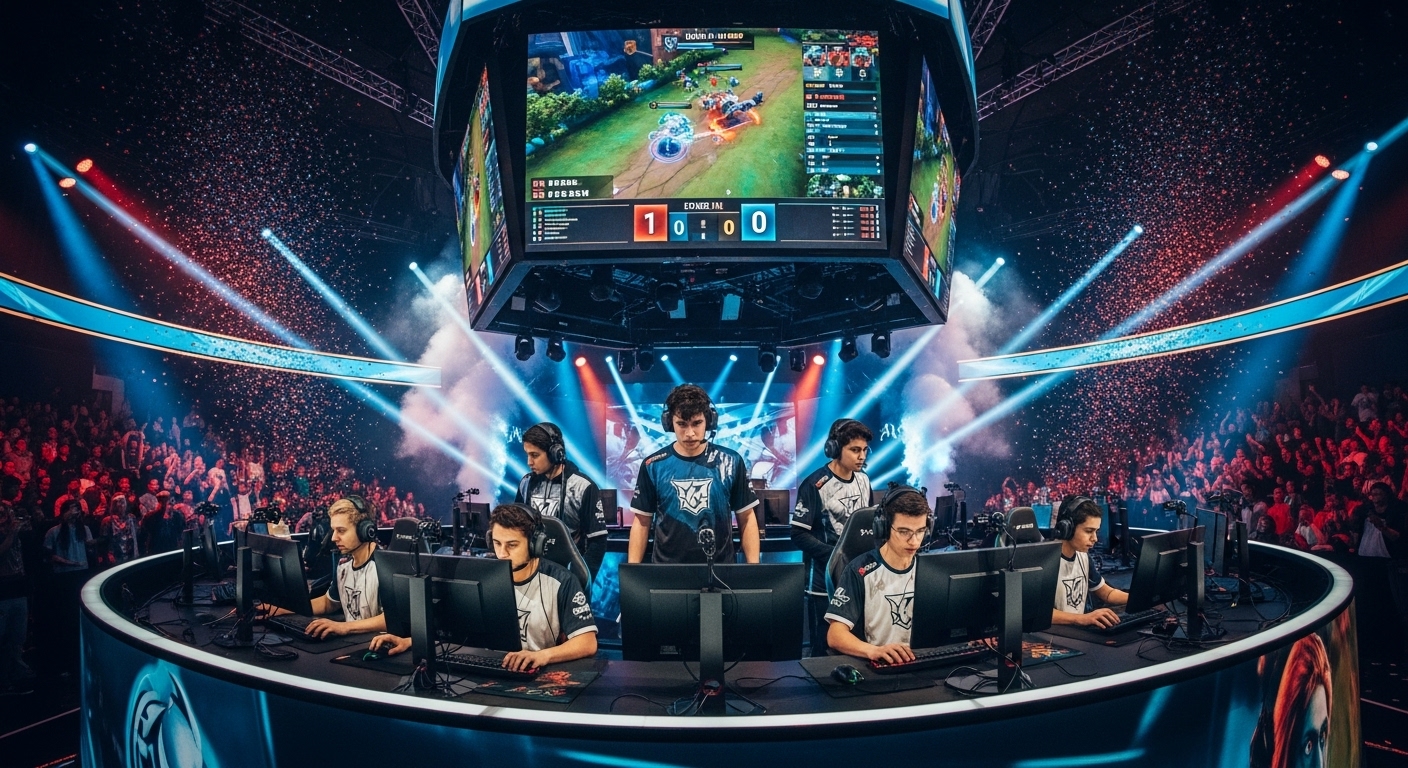
Esports: The Rise of Digital Competition and Its Cultural Impact
In the past few decades, the world of competitive gaming has undergone a radical transformation. Esports, or electronic sports, has risen from being a niche hobby into a global entertainment phenomenon. What was once a small community of gamers playing against each other in living rooms and local arcades has evolved into a multi-billion-dollar industry with millions of fans, professional players, and world-class tournaments. Today, esports is no longer just a form of entertainment for gamers—it’s a serious competitive sport with massive influence, dedicated audiences, and a significant impact on global culture. This blog will explore the rise of esports, the factors that contributed to its success, the business side of the industry, and the lasting impact it has had on the world of entertainment and beyond.
The Birth of Esports: From Gaming to Global Competitions
The origins of esports can be traced back to the early 1970s when the first competitive video game tournaments began to emerge. However, it wasn’t until the late 1990s and early 2000s that the real foundation for what we now recognize as esports was built. The rise of multiplayer games like Quake and StarCraft created the ideal environment for competitive play, where players could compete not just locally, but internationally.
In the early years, competitive gaming was mostly a small-scale, grassroots affair. Local tournaments, LAN (Local Area Network) parties, and informal competitions were the backbone of the gaming community. The introduction of online multiplayer games expanded the horizon, allowing players from across the globe to face off against each other. As internet connectivity improved and gaming technology advanced, esports gained a solid foundation, growing both in popularity and in the scale of its events.
A turning point for esports came in 2011 with the launch of Twitch, a streaming platform specifically designed for gamers. For the first time, fans could watch live broadcasts of major tournaments from anywhere in the world. The accessibility and interactivity of the platform fueled the growth of esports, turning what was once a niche activity into a mainstream spectacle.
Esports tournaments like The International (for Dota 2) and the League of Legends World Championship became global events with prize pools reaching into the millions. These events began drawing massive live audiences and were broadcast to millions of viewers worldwide. Esports had officially made its mark on the global entertainment landscape.
The Growth of Esports: From Amateur to Professional Athletes
One of the most fascinating aspects of esports is the rise of professional gaming. The professionalization of esports players is similar to how traditional sports developed: dedicated athletes who spend countless hours honing their skills, following rigorous training regimens, and competing at the highest level. Today, professional gamers are no different from traditional athletes in terms of discipline, focus, and work ethic.
Esports players train for hours each day, often participating in scrims (practice matches), reviewing game footage, and strategizing with their teammates. To stay competitive, players need to be able to adapt to constantly changing game mechanics, map updates, and evolving strategies. Much like in traditional sports, esports players also rely on coaches and analysts who help them refine their skills and improve their performance.
In team-based games such as League of Legends, Valorant, and Overwatch, communication and coordination are key to success. Players must not only be experts in their individual roles but also be able to work seamlessly with their teammates. The strategies in these games require deep analysis and in-game decision-making, often under extreme pressure. The high level of skill required in esports has contributed to its recognition as a legitimate competitive sport, attracting sponsorships, media attention, and a growing fanbase.
As the popularity of esports has grown, so has the demand for professional leagues. Organizations like the Overwatch League, League of Legends Championship Series (LCS), and Call of Duty League have turned competitive gaming into a highly structured industry. These leagues operate similarly to traditional sports leagues, with regular seasons, playoffs, and world championships. Teams sign contracts with players, secure sponsorship deals, and even sell merchandise, which has made esports a profitable business venture.
The Business of Esports: A Multi-Billion-Dollar Industry
Esports is no longer just a pastime—it’s a business. The global esports industry is projected to reach over $1 billion in revenue in the coming years, driven by various revenue streams including sponsorships, media rights, ticket sales, and merchandise. Sponsorship deals are a major source of income for esports organizations, with major brands such as Intel, Red Bull, and Coca-Cola investing in esports teams, events, and tournaments.
The revenue generated from esports tournaments is also substantial. Major events like The International for Dota 2 and the League of Legends World Championship offer prize pools worth millions of dollars. These tournaments are often sponsored by companies that want to reach esports’ massive and highly engaged audience. The revenue generated by these events also benefits the players, coaches, and organizers, making esports a viable and lucrative career option for top-level competitors.
Streaming platforms like Twitch and YouTube Gaming have also become integral parts of the esports ecosystem. These platforms allow fans to watch live competitions, interact with players, and follow their favorite teams. Twitch, in particular, has become the go-to platform for esports streaming, where millions of viewers tune in to watch top players compete, as well as casual gamers who create content, share strategies, and interact with their communities. Streamers often make money through ads, subscriptions, donations, and sponsorships, making it possible for gamers to turn their passion into a full-time profession.
Merchandising has become another important revenue source for esports organizations. Teams now sell jerseys, apparel, and even in-game items to their fans, helping them to build a brand and generate additional income. The rise of esports as a spectator sport has also created new opportunities in event production, as tournaments and championships are broadcast live to global audiences.
Esports Streaming: A Global Cultural Phenomenon
Esports would not have reached its current level of success without the advent of streaming platforms. Streaming has allowed esports to transcend the boundaries of traditional broadcast television, reaching viewers on a global scale. Twitch, in particular, has been a game-changer for the esports community. With over 15 million daily active users, it has become the primary platform for watching live esports tournaments, individual gameplay, and fan-driven content.
The popularity of esports streaming has created a unique form of viewer engagement. Fans can interact with players, ask questions, and discuss the action in real-time through live chat. Viewers can even contribute directly to streamers through donations and subscriptions, providing an income stream for those who build large followings. Streamers are not just broadcasters but often become content creators, influencers, and personalities in their own right, with significant cultural clout.
Esports has also embraced other forms of media to engage fans. Social media platforms like Twitter, Instagram, and TikTok have become crucial tools for esports teams and players to connect with their fans, share updates, and promote events. Esports players, many of whom have millions of followers, are becoming celebrities in their own right, and brands are eager to tap into their influence.
Additionally, major esports tournaments are now broadcast on mainstream TV channels and digital networks. The accessibility of these events, available in multiple languages and formats, has helped boost esports’ cultural relevance. As esports continues to grow, it will likely continue to merge with traditional media, offering more opportunities for cross-promotion and integration with mainstream entertainment.
The Cultural Impact of Esports: Breaking Barriers
One of the most striking aspects of esports is its ability to bring together people from diverse backgrounds and cultures. Unlike traditional sports, where geographical barriers and physical attributes often play a major role, esports is inherently inclusive. Anyone with a computer or gaming console can participate in competitive gaming, regardless of age, gender, or physical ability. This inclusivity has led to the rise of a global esports community where fans from different corners of the world can connect and compete.
Esports also challenges traditional notions of what it means to be an athlete. Instead of relying on physical prowess, esports athletes focus on mental acuity, strategic thinking, and teamwork. In this sense, esports provides a new model of sportsmanship and competition, one that values skill and intelligence over raw physicality. This has helped shift perceptions of video games, which were once viewed as a waste of time, into a legitimate and respected form of entertainment and competition.
Furthermore, esports has created new career opportunities in areas such as content creation, broadcasting, event management, coaching, and marketing. As the industry expands, esports will continue to provide a diverse range of job prospects for individuals with a variety of skills. The increasing integration of esports into schools and universities, where some institutions even offer scholarships for top esports players, shows that the digital world of competitive gaming is here to stay.
The Future of Esports: Expanding Horizons
The future of esports looks incredibly promising. As technology continues to evolve, esports will likely continue to push the boundaries of what’s possible. Virtual reality (VR) and augmented reality (AR) will bring even more immersive experiences to both players and fans. VR could offer players new ways to experience competition, while AR could bring esports to life in entirely new ways for viewers.
Cloud gaming is another area that could revolutionize esports. With cloud technology, players won’t need expensive hardware to compete at the highest level. Games could be played on a variety of devices, making competitive gaming more accessible to a larger audience. This shift would likely lead to the democratization of esports, with more players and fans able to participate without needing to invest in costly equipment.


