The Digital Arena: How Esports Redefined Competition in the Modern Age
The Rise of a New Kind of Sport
In the past, the word “sports” evoked images of athletes sweating under stadium lights, cheering fans waving flags, and physical endurance tested to its limits. Yet, in the digital age, the definition of sport has expanded beyond the boundaries of the physical field. Esports, or electronic sports, has emerged as a revolutionary form of competition where players face off through virtual battlegrounds instead of physical ones.
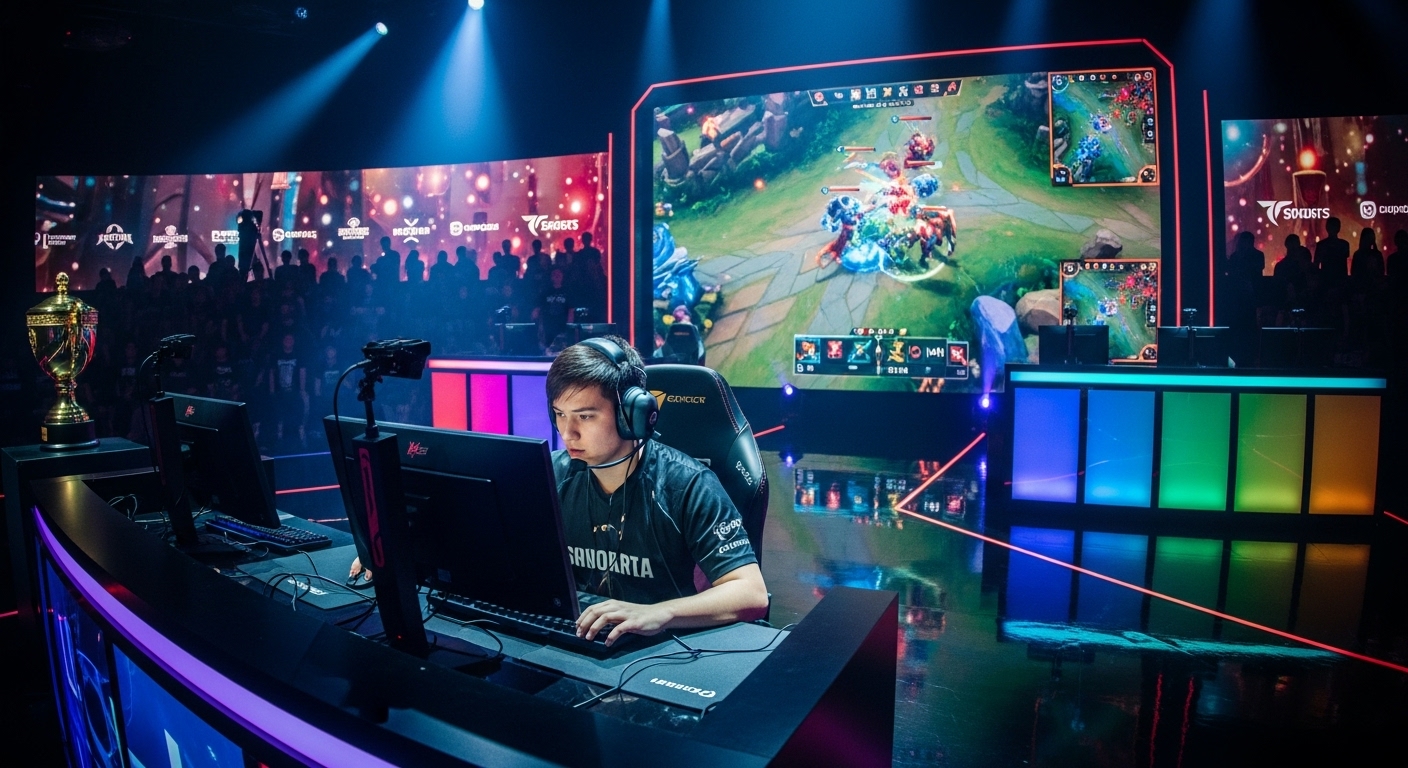
Over the past two decades, esports has evolved from small gaming tournaments held in dimly lit rooms to grand events filling stadiums with millions of online viewers. Games such as League of Legends, Dota 2, Counter-Strike: Global Offensive, and Fortnite have transformed passionate gamers into global celebrities. What was once a niche hobby has become a billion-dollar industry, influencing culture, technology, and the entertainment landscape worldwide.
From Arcades to Arenas: The Early Days of Esports
The journey of esports began in the early 1980s when arcade competitions like Space Invaders and Pac-Man drew crowds of gaming enthusiasts. These early tournaments were simple, but they laid the foundation for organized competitive gaming. By the 1990s, with the rise of home consoles and personal computers, competitive gaming began to attract serious attention.
The introduction of the internet changed everything. Players could now compete across continents without leaving their homes. Titles such as StarCraft and Quake became pioneers of online esports, establishing organized leagues and professional teams. South Korea, in particular, played a pivotal role in shaping the global esports scene. Government support, specialized gaming cafes (PC bangs), and dedicated television channels turned professional gaming into a legitimate career path.
The Professionalization of Esports
As esports grew, it began to mirror traditional sports in structure and organization. Professional teams formed with coaches, analysts, and sponsorship deals. Esports organizations such as Fnatic, Team Liquid, and Cloud9 emerged as household names, managing multiple teams across different games.
Tournaments became grander in scale and production value. Events like The International for Dota 2 and the League of Legends World Championship offered multimillion-dollar prize pools, rivaling traditional sports tournaments. These competitions attracted not only dedicated gaming fans but also mainstream audiences and investors.
The players themselves transformed into celebrities, with millions of followers on streaming platforms and social media. Their intense training routines, strategic thinking, and lightning-fast reflexes proved that esports required not just talent, but discipline and mental strength.
The Role of Technology in Esports Growth
The success of esports would not have been possible without rapid advancements in technology. High-speed internet connections, powerful gaming hardware, and streaming platforms revolutionized the way people played and watched games. Services like Twitch and YouTube Gaming provided a space for players to broadcast their matches live, allowing fans to interact with them in real time.
Virtual Reality (VR) and Augmented Reality (AR) have also begun to influence the esports world. As these technologies continue to evolve, they promise to bring even more immersive experiences to players and spectators. In addition, artificial intelligence tools are being used to analyze player performance, develop strategies, and even create fairer matchmaking systems.
Esports as a Career Path
What was once dismissed as a hobby is now a legitimate profession. The esports industry offers a wide range of career opportunities beyond just playing. Commentators, known as shoutcasters, provide play-by-play analysis during tournaments. Coaches and analysts work behind the scenes to refine team strategies. Event organizers, content creators, and marketers all play crucial roles in the ecosystem.
Many universities around the world now offer esports scholarships, recognizing the potential of competitive gaming as both an educational and professional pursuit. Some schools have even built dedicated esports arenas to support their student teams. The idea that one can build a stable career in gaming is no longer a dream—it’s a reality.
The Economics of Esports
The financial side of esports is as fascinating as the gameplay itself. With millions of fans globally, brands see enormous marketing potential in sponsoring teams, events, and players. Major corporations from various industries—ranging from technology to fashion—are investing heavily in the esports sector.
Merchandise, ticket sales, streaming revenue, and in-game purchases contribute to the growing economy. Prize pools for major tournaments continue to set new records, and streaming platforms generate significant ad revenue from esports content. Esports has proven that digital entertainment can be as profitable and sustainable as traditional sports.
The Cultural Impact of Esports
Esports is not just a competitive pastime—it’s a cultural phenomenon. It has brought together people of all backgrounds, languages, and nationalities, united by a shared love for gaming. Online communities have formed around games, fostering collaboration, creativity, and even friendships across borders.
Streaming personalities and professional players have become cultural icons, influencing trends in fashion, music, and entertainment. Esports has also inspired countless documentaries, films, and academic studies exploring the psychology and social dynamics of gaming.
The inclusion of esports in international events like the Asian Games highlights its growing acceptance as a legitimate sport. While debates continue about whether esports should be part of the Olympic Games, its global reach and passionate fanbase are undeniable.
Challenges Facing the Esports Industry
Despite its success, esports faces several challenges. One of the major issues is maintaining player health and well-being. The demanding schedules, long practice hours, and constant online exposure can lead to burnout, stress, and physical strain. Esports organizations are now investing in mental health support and physical training to ensure player longevity.
Another challenge is the issue of regulation. Since esports spans multiple games, publishers, and countries, establishing a standardized set of rules is complex. Concerns over cheating, match-fixing, and online harassment have prompted calls for stricter oversight and better governance within the industry.
Gender diversity is another area where esports has room to grow. Although women are increasingly participating as players, commentators, and creators, barriers still exist. Encouraging inclusivity and providing equal opportunities is essential for the continued growth and integrity of the esports community.
The Future of Esports
The future of esports looks brighter than ever. With continued technological advancements and growing mainstream recognition, the industry is poised for even greater expansion. Mobile esports, in particular, has opened the door to millions of new players in regions where gaming PCs and consoles are less accessible.
The rise of cloud gaming promises to make esports even more inclusive, allowing players to compete without expensive hardware. Virtual arenas and metaverse platforms may soon host tournaments where fans can experience the thrill of live events from the comfort of their homes.
As more young people dream of becoming professional gamers, educational programs and training academies will play an important role in nurturing talent responsibly. The key to sustaining esports’ success lies in balancing competition, entertainment, and ethical responsibility.
Why Esports Matters in Today’s World
Esports represents more than just digital competition—it reflects the evolution of human connection in a virtual age. It shows how creativity, technology, and passion can merge to create entirely new forms of entertainment and community. Esports celebrates intelligence, teamwork, and perseverance, proving that success is not limited to physical ability alone.
In many ways, esports mirrors the spirit of traditional sports: the thrill of victory, the heartbreak of defeat, and the unbreakable bond between players and fans. It encourages strategic thinking, quick decision-making, and collaboration—skills that are increasingly valuable in our modern world.
Conclusion: The Digital Legacy
The rise of esports marks one of the most remarkable cultural transformations of the 21st century. What began as a pastime for a few has become a global stage where millions compete, create, and connect. It has redefined what it means to be an athlete, an entertainer, and a fan.
Esports is no longer the future—it is the present. With every tournament, every player, and every passionate fan, it continues to shape the digital legacy of our generation. As technology and creativity evolve hand in hand, esports stands as a powerful reminder that competition, in any form, unites us all through the universal language of play.


